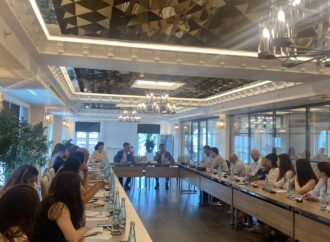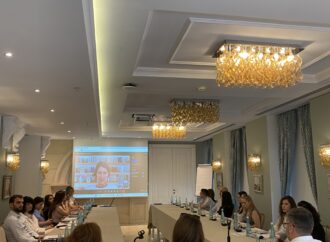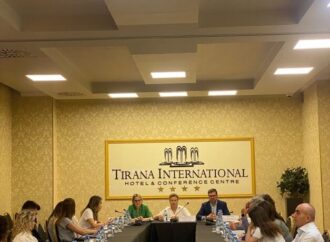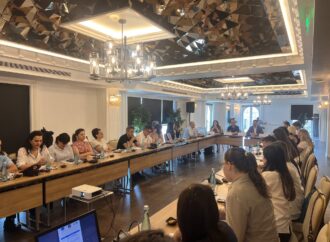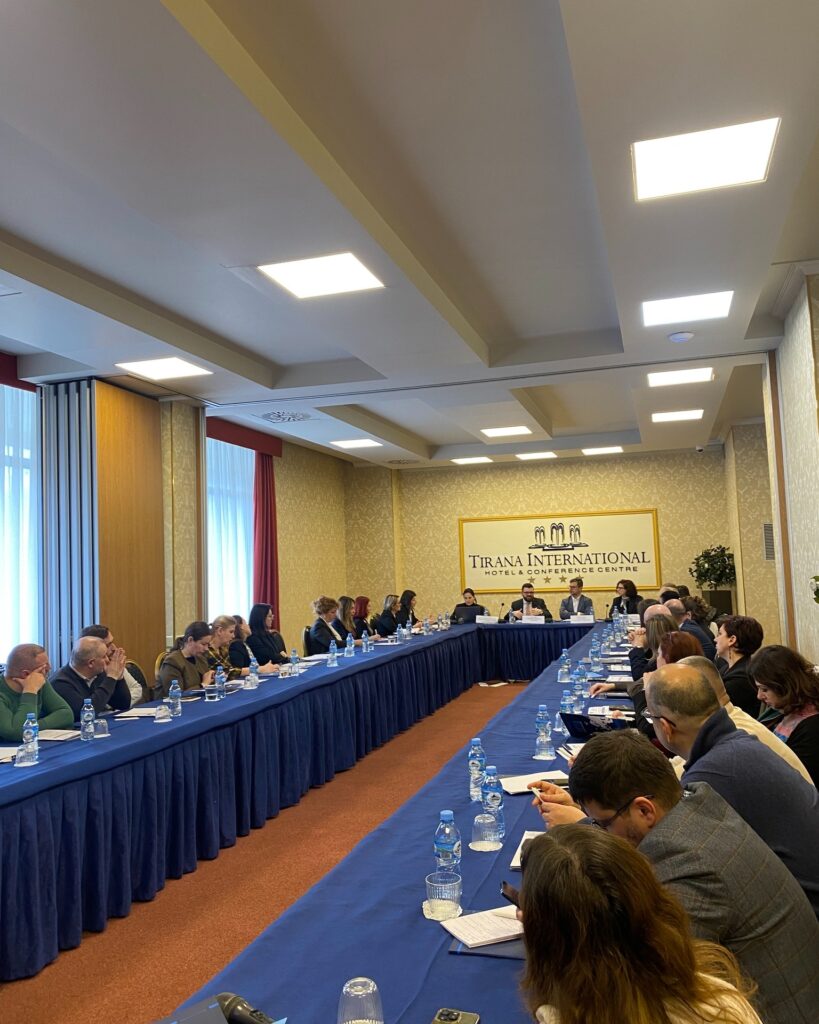
The European Movement in Albania (EMA), in cooperation with the Ministry of Justice, held on 17 February 2026 the next roundtable discussion on progress in fulfilling the interim benchmarks for Chapter 23 – Judiciary and Fundamental Rights, within the framework of the Partnership Platform for European Integration and the National Convention on European Integration. This meeting, attended by representatives of civil society organizations, public institutions, professionals, academics, and other interest groups, focused not only on the progress of reforms and inter-institutional dialogue, but also on informing participants about the organization of the “Crime Victims Awareness Week” and the launch of the drafting process of the “OGP National Action Plan 2026–2030.”
In his opening remarks, Gledis Gjipali, Executive Director of the European Movement in Albania (EMA), emphasized that inter-institutional cooperation and the contribution of civil society organizations, experts, professionals, and academia are crucial at this critical moment, where the speed of the process must be combined with the quality of reforms. He underlined that engagement should begin with information-sharing, followed by active participation and contributions through organized roundtables or online public consultation platforms. Such instruments, he noted, should be used by stakeholders as mechanisms to engage in decision-making and remain informed about developments in the process. The integration process is inherently complex, beginning with legislative approximation, where the main burden lies with the public administration. Nevertheless, transparency with the public regarding information and expected developments, not only for this chapter but across all chapters, remains essential to inform stakeholders and enhance their contributions. Coordinated and harmonized drafting of legal and sub-legal acts, particularly where multiple implementing institutions are involved, reduces the need for later revisions and supports smoother and more effective implementation.
Tedi Dobi, Deputy Minister of Justice and negotiator for Chapter 23, expressed appreciation for participants’ engagement and highlighted the importance of the process for all stakeholders. He stressed that the themes of this chapter should not be viewed as important only in the context of EU integration, but as fundamental pillars of good governance and citizens’ rights. Within the framework of the roundtable, he informed participants that the Interim Benchmark Assessment Report (IBAR) had been submitted, emphasizing that its preparation involved coordination not only among public institutions but also with civil society actors. The next step, he noted, is the assessment by EU Member States regarding the progress achieved. Albania still has work ahead in meeting European standards, and maintaining the same level of intensity remains essential. Regarding legislative developments under Chapter 23, he noted that various interest groups have contributed through public consultation platforms on initiatives such as the Law on Lobbying and amendments to the Criminal Code, the latter aiming to transpose seven EU directives. For the Criminal Code alone, 25 consultation meetings were held with various stakeholders. On justice reform and the consolidation of new justice institutions, he mentioned that the second phase of the vetting process for appeals and pending cases (21 in total) is expected to conclude in April 2026. Institutional transparency has also progressed, while ensuring the protection of sensitive personal data. Clarifying the status of justice inspectors to guarantee competitiveness and high evaluation standards, strengthening the role of legal assistants, introducing specialized exams for entry into the profession, and reinforcing ethical standards for candidates at the School of Magistrates were highlighted as key reforms toward a more efficient system. The justice system budget has increased by 10%, including a 2.1% increase for the prosecution and a 25% increase for the High Inspectorate of Justice (HIJ). Investments in court infrastructure and the development of the new Tirana Justice Campus are ongoing, including identification of urgent needs and harmonized solutions for court accommodation. In the areas of anti-corruption and human rights, he mentioned positive developments concerning the Law on Donations and Sponsorships, media legislation and the Audiovisual Media Authority, as well as property-related issues.
Anairda Arizaj, Acting Director at the Directorate of Justice Policies and Strategies at the Ministry of Justice, focused on the Crime Victims Awareness Week, part of the Intersectoral Strategy for the Protection of Crime Victims (2024–2030). She expressed appreciation for cooperation with the Ministry of Interior, the Ministry of Health and Social Protection, and 12 civil society organizations engaged on the ground. Through concrete measures for informing, protecting, and supporting victims and their families, the initiative aims to reduce crime victimization and increase public trust (particularly victims’ trust) in the justice system and law enforcement institutions. Since January, awareness activities have been conducted nationwide, including information sessions with vulnerable groups, educational activities with children and youth, and community initiatives. Close cooperation with local government authorities was highlighted as an added value in strengthening victim protection mechanisms and ensuring access to free legal aid. She concluded by emphasizing that this initiative represents a structured and coordinated approach among all actors toward a victim-centered and inclusive system aligned with European standards and the objectives of Chapter 23.
Mona Xhexhaj, Advisor to the Minister of State for Public Administration and Anti-Corruption, focused on the drafting process of the OGP National Action Plan 2026–2030. She explained that OGP is a voluntary international initiative implemented in 74 countries, with Albania participating since 2011, aiming to promote open governance based on transparency, accountability, and inclusiveness. Key innovations include extending the action plan to a four-year period, compared to previous two-year cycles, to better align with the EU integration negotiation agenda. For the first time, in addition to ministries, institutions such as Parliament, the National Agency for Information Society, the Commissioner for Protection from Discrimination, and the Commissioner for the Right to Information and Protection of Personal Data are included. The Minister of State for Public Administration and Anti-Corruption serves as the national coordinator for leading the process in continuous cooperation with public institutions. The new methodology includes not only institutional engagement but also consultations and recommendations from civil society organizations, experts, and media. A Multi-Stakeholder Committee has been established with equal representation from public institutions and civil society organizations. Based on identified needs, she emphasised that dedicated trainings have been organized with the support of OGP Europe.
The meeting concluded with discussions and recommendations from participants, particularly concerning justice institutions, access to justice, protection of victims, especially those belonging to marginalized groups, and the need for enhanced communication and transparency by public institutions in policymaking and decision-making processes.